Boom pump, as a core type of concrete pumping equipment, plays an irreplaceable role in large-scale construction projects such as high-rise buildings, bridges, and tunnels. For purchasers and industry practitioners, predicting the trend of boom concrete pump price in the next five years and clarifying its influencing factors is crucial for formulating reasonable procurement plans and controlling project costs. The boom concrete pump price is not a fixed value but is comprehensively affected by multiple factors such as raw material costs, technological innovation, market supply and demand, policy regulations, and industry competition. Meanwhile, it also has an indirect correlation with the development of related products such as portable concrete pumps and the overall fluctuation of the cost of concrete pump. This article will systematically analyze the key factors that will influence the boom concrete pump price in the next five years, providing a reference for industry decision-making.
Fluctuations in Raw Material Prices and Changes in Production Costs
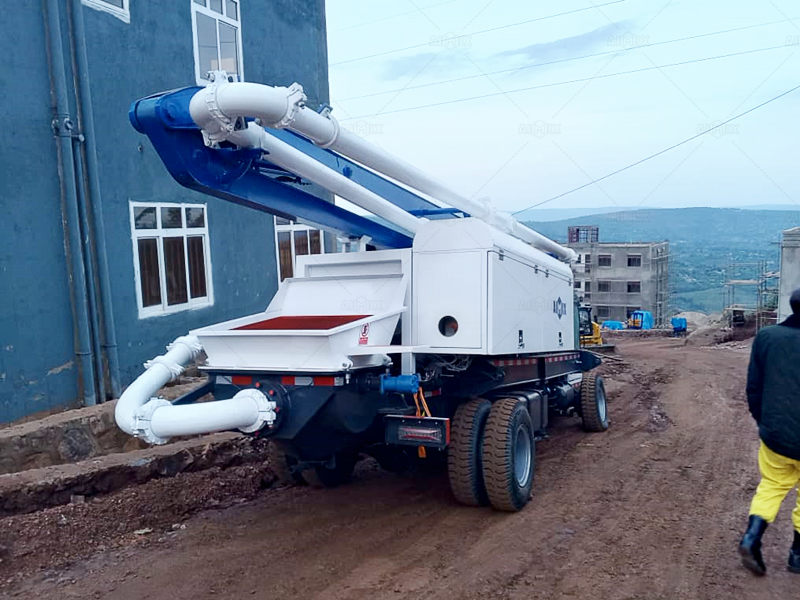
The cost of concrete pump, including boom pump, is largely determined by raw material prices, and fluctuations in upstream raw material markets will directly affect the boom concrete pump price in the next five years. Boom pumps are mainly composed of steel, hydraulic components, engines, and electrical systems, among which steel and hydraulic parts account for a high proportion of the total cost—raw material costs even account for more than 80% of the production cost of most construction machinery products. In the next five years, with the deepening of global “carbon peaking and carbon neutrality” policies, the production capacity of high-energy-consuming raw materials such as steel may be restricted, which may lead to fluctuations in steel prices. For example, if environmental protection policies force steel mills to upgrade their production processes, the production cost of steel will increase, and this cost pressure will be transmitted to downstream boom pump manufacturers, thereby pushing up the boom concrete pump price. In addition, the price of key components such as imported hydraulic pumps and engines is also affected by global supply chain stability, exchange rate fluctuations, and international trade policies. If there are disruptions in the global supply chain or appreciation of the currencies of major component-exporting countries, the procurement cost of core components will rise, further increasing the production cost of boom pumps. On the contrary, the popularization of new materials and the optimization of production processes may help reduce costs; for instance, the application of high-strength lightweight steel can reduce the weight of boom pumps while ensuring performance, thereby reducing raw material usage and lowering production costs to a certain extent.
Technological Innovation and Upgrading of Product Functions
Technological innovation and functional upgrading are important factors driving changes in boom concrete pump price in the next five years. With the continuous development of the construction industry towards intelligence, greenization, and high efficiency, the market has increasingly high requirements for the performance of boom pumps. Manufacturers will invest a lot of capital in research and development to improve the intelligence level, energy efficiency, and operational safety of boom pumps. For example, the integration of IoT-enabled remote monitoring systems, automatic leveling technologies, and energy-saving power systems into boom pumps will significantly improve their operational efficiency and safety, but this will also increase the R&D and production costs, which will be reflected in the boom concrete pump price. In addition, the research and development of new energy boom pumps (such as electric or hybrid models) to meet environmental protection requirements will also be a key trend in the next five years. Although new energy technologies may have higher initial costs, with the maturity of technology and large-scale production, their cost advantage may gradually appear in the later stage, which will have a two-way impact on the boom concrete pump price. Meanwhile, the technological gap between different manufacturers will also lead to price differentiation; enterprises with core technological advantages can rely on high-performance products to maintain a premium price, while small and medium-sized manufacturers may adopt cost-effective strategies to compete, which will further enrich the price structure of the boom pump market.
Changes in Market Supply and Demand Driven by Infrastructure Construction
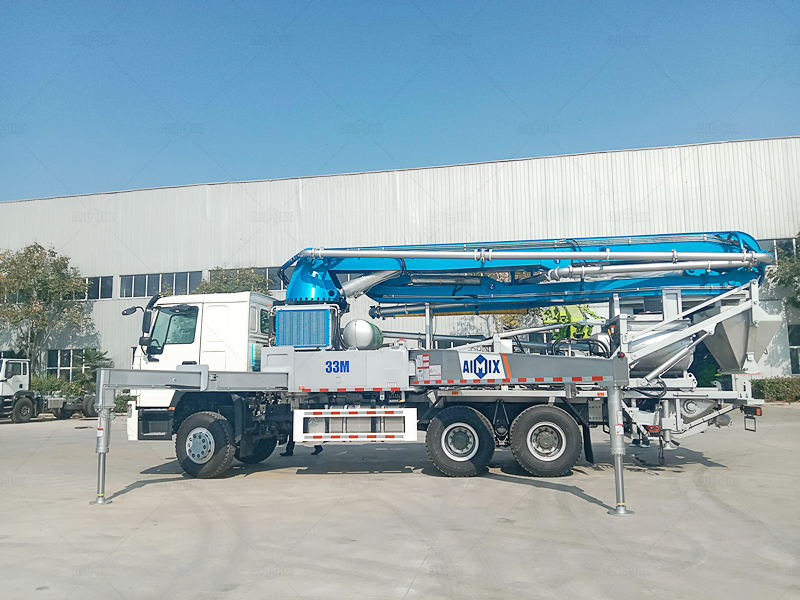
The supply and demand relationship in the construction machinery market, which is closely linked to infrastructure construction, will be a core factor affecting the boom concrete pump price in the next five years. Globally, rapid urbanization and the expansion of infrastructure investment in developing countries (especially in the Asia-Pacific and Middle East regions) will drive the continuous growth of demand for concrete pumping equipment including boom pumps. It is predicted that the global construction pump market will maintain a steady growth rate in the next ten years, with the market scale expected to expand significantly. In China, policies such as new urbanization construction, “Belt and Road” initiative, and the construction of smart cities will continue to boost the demand for boom pumps in high-rise buildings, transportation infrastructure, and urban renewal projects. If the demand grows faster than the supply, the boom concrete pump price is likely to show an upward trend. On the other hand, the supply of boom pumps is affected by the production capacity of manufacturers. In recent years, major manufacturers have continuously expanded their production capacity, and the market competition has become increasingly fierce. If the supply exceeds the demand in some periods, manufacturers may adopt price reduction strategies to promote sales, which will suppress the upward trend of boom concrete pump price. In addition, the development of portable concrete pumps will also have a certain impact on the demand structure of boom pumps; portable concrete pumps are suitable for small and medium-sized projects due to their flexibility and low cost, and their popularization may occupy part of the low-end market, thereby affecting the pricing strategy of low-tonnage boom pumps.
Policy Regulations and Environmental Protection Requirements
Policy regulations, especially environmental protection and industry standard policies, will have a profound impact on the boom concrete pump price in the next five years. With the increasing global attention to environmental protection, countries will introduce more stringent emission standards for construction machinery. For example, the upgrading of diesel engine emission standards will force boom pump manufacturers to replace high-emission engines with low-emission ones, or develop new energy products. The transformation of production processes and the upgrading of components required to meet environmental protection standards will undoubtedly increase the production cost of boom pumps, leading to an increase in boom concrete pump price. In addition, policies related to infrastructure investment, import and export tariffs, and financial subsidies will also indirectly affect the boom pump market. For example, government subsidies for new energy construction machinery can reduce the purchase cost pressure of purchasers, thereby stimulating market demand and affecting the pricing of manufacturers; the adjustment of import tariffs on core components will directly affect the production cost of domestic boom pumps, and then transmit to the final sales price. At the same time, the improvement of industry access standards will help eliminate backward production capacity, optimize the market competition pattern, and prevent vicious price competition, which is conducive to the stable operation of boom concrete pump price at a reasonable level.
Market Competition Pattern and Changes in Brand Strategy
The evolution of the global boom pump market competition pattern and changes in brand strategies will also be important factors influencing boom concrete pump price in the next five years. At present, the boom pump market is dominated by a few international and domestic leading enterprises, such as Sany Heavy Industry, Zoomlion, XCMG in China, and Caterpillar in the United States. These leading enterprises have obvious advantages in technology, scale, and brand, and their pricing strategies will have a guiding role in the entire market. In the next five years, with the continuous growth of market demand, more manufacturers may enter the boom pump market, intensifying market competition. To seize market share, enterprises may adopt price competition strategies, which will put downward pressure on the overall boom concrete pump price. On the other hand, leading enterprises may focus on high-end market segments, relying on technological innovation and high-quality after-sales service to maintain product premiums, while small and medium-sized enterprises may focus on the mid-to-low-end market and compete with cost-effective products, forming a differentiated price pattern. In addition, the integration of the industrial chain and the optimization of supply chain management will also affect the cost control capabilities of enterprises; enterprises with perfect industrial chains and efficient supply chain management can reduce production and operation costs, and have more room for pricing flexibility, which will further affect the fluctuation of boom concrete pump price.
In summary, the boom concrete pump price in the next five years will be comprehensively influenced by multiple factors such as raw material costs, technological innovation, market supply and demand, policy regulations, and industry competition. It is expected that under the combined effect of these factors, the boom concrete pump price will show a trend of “fluctuating upward with structural differentiation”—the overall price may rise moderately due to cost pressure and technological upgrading, while there will be obvious price gaps between different brands and models. For purchasers, it is necessary to pay close attention to the changes of these influencing factors and reasonably arrange procurement plans; for manufacturers, it is crucial to enhance cost control capabilities, strengthen technological innovation, and formulate flexible pricing strategies to respond to market changes. The fluctuation of boom concrete pump price is not only a reflection of the market economy but also an important indicator of the development trend of the construction machinery industry.